
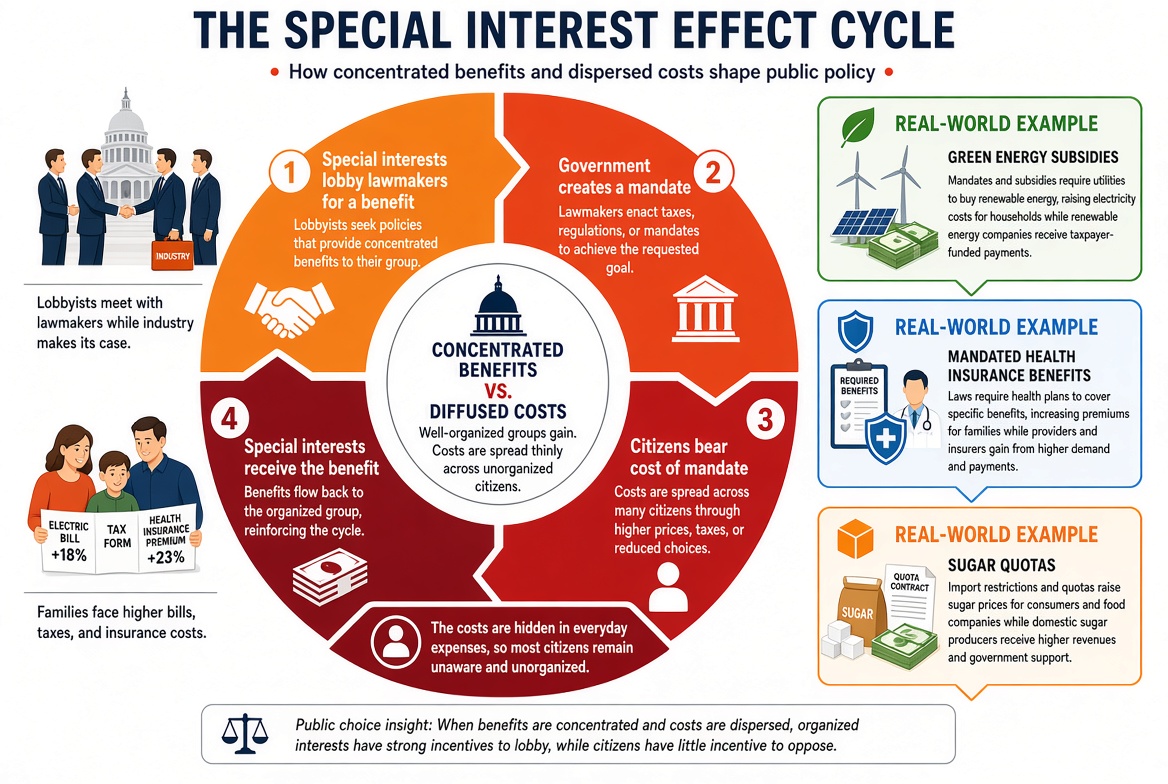
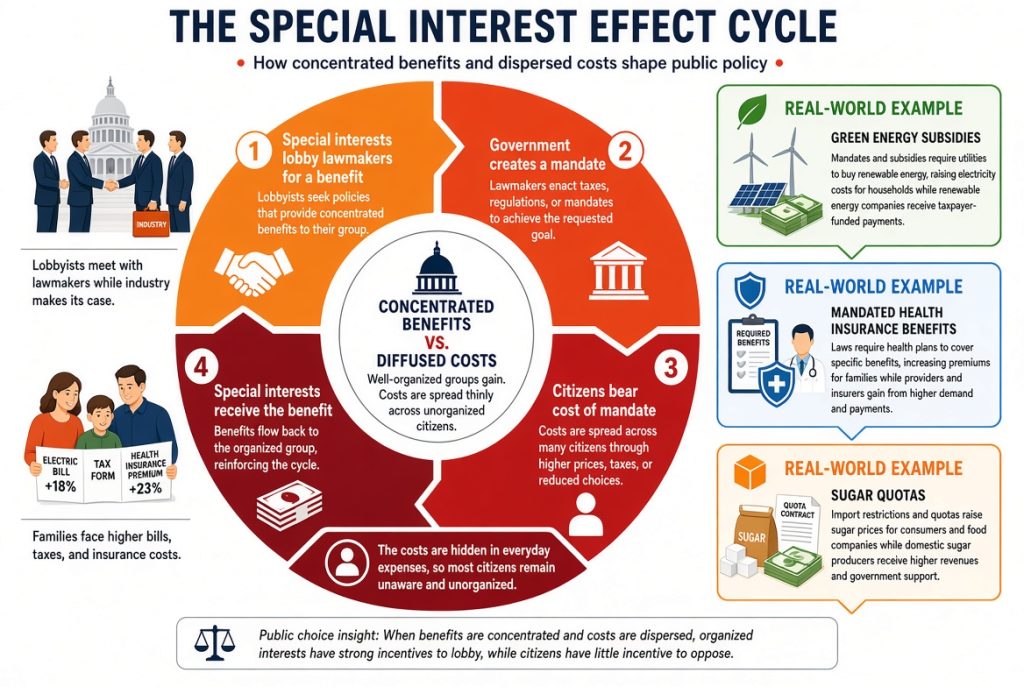
When politicians talk about “the national interest”, they usually mean the things that benefit the country as a whole: its citizens, its economy and its security. Special interests are something narrower. They are essentially the interests of particular groups within that country (an industry, a company, a lobby, a political elite) that want something for themselves, and that often try to dress it up as the national interest, even when strictly speaking it isn’t.
National interests
National interests are broad and collective. In economic terms, they include steady growth, low inflation, high employment, a stable currency, affordable energy and access to foreign markets. In geopolitical terms, they include national security, territorial integrity, stable borders, good relations with neighbours and a seat at the table (like ay the UN) where global decisions are made.
The test is simple: does it benefit most of the population, most of the time? A stable currency helps the pensioner, the importer and the student studying abroad alike. Peace on your borders helps everyone.
Special interests
Special interests are the goals of specific groups with a concentrated stake in an outcome. Think of oil companies wanting drilling rights abroad, pharmaceutical firms wanting patent protection in foreign markets, arms manufacturers wanting bigger defence budgets, farmers wanting subsidies, or banks wanting less regulation.
Special interests are not automatically bad. A thriving pharmaceutical sector creates jobs and pays taxes; a strong mining industry earns foreign currency. The problem comes when a narrow group’s gain is paid for by everyone else, at home or abroad. Tariffs that protect one domestic industry can raise prices for every consumer. Agricultural subsidies in rich countries can make it impossible for an African farmer to compete in the same market. A war that is profitable for a defence contractor can be ruinous for the taxpayer and catastrophic for the country where it’s fought.
Economists describe this as concentrated benefits and diffuse costs. A small group gains a lot and lobbies hard; a large group loses a little each and rarely organises. That’s why special interests so often win.
When the two get blurred
The trickiest part is that special interests are rarely presented as such. A trade war is sold as protecting national jobs. A foreign intervention is sold as national security. Keeping a struggling industry alive with public money is sold as strategic independence. Sometimes these claims are true; often they are a narrow interest wearing a national costume, meaning they’re not always what they’re sold to be.
In developing countries, the most powerful special interest is often incumbency itself: the desire of those in power to stay in power. Policies that look like they serve the nation (crackdowns in the name of stability, contracts handed out in the name of development) can really be about protecting the ruling group.
Why it matters
Understanding the difference helps citizens ask the right question about any policy: who actually benefits, and who pays? In a globalised economy, that question doesn’t stop at the border. When a great power acts on its special interests, the costs are frequently exported to poorer countries that had no say in the decision. Telling the two apart is the first step to holding leaders accountable for which one they are really serving.
- 0 Comments
- geopolitics
- governance
- interests
- lobbying
- special interests